
- -10%
- Save 10%


What is L-carnitine?
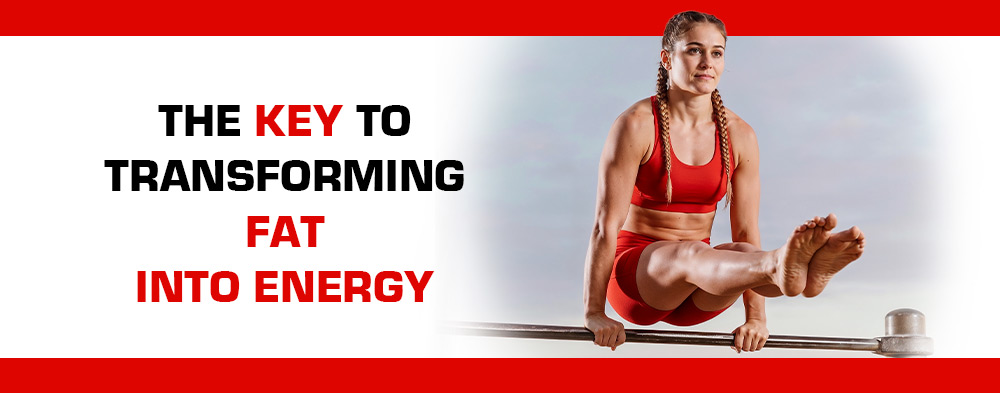
L-Carnitine is a natural compound that the body uses to convert fats into energy: it helps fatty acids reach the inside of cells, where they transform into the fuel that muscles and the body need to function1.
-01.jpg)
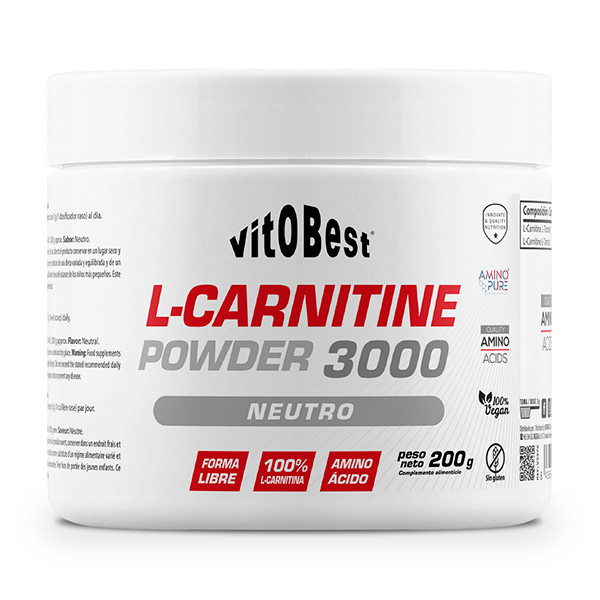
The body produces it by itself and we also get it from the diet, especially from meat and other animal-based foods. However, there are situations where the needs increase or the intake decreases: intense exercise, aging or diets with little animal protein (like vegetarian or vegan) are the most common. In L-Carnitine 3000 Powder, L-Carnitine is provided in the form of L-Carnitine L-Tartrate Aminopure®, an ingredient internationally recognized for its high standards of quality, purity, and safety.
Why L-Tartrate?
L-Carnitine L-Tartrate (LCLT) is a salt of L-Carnitine with tartaric acid developed to maximize the active ingredient: it stands out for its high solubility and optimized absorption, along with great stability and excellent tolerance. It is also the form chosen in most studies on performance and muscle recovery2,3,4.
-03.jpg)
The raw material used in this product comes from Aminopure®, a source of L-Carnitine used in sports supplementation and developed under strict quality controls. Its manufacturing process guarantees exclusively the presence of the biologically active form, L-Carnitine, with high standards of purity and quality. That's why L-Carnitine 3000 Powder chooses L-Tartrate: L-Carnitine in its most absorbable, stable, and practical version for those who take training seriously.
-05.jpg)
Purity and format:
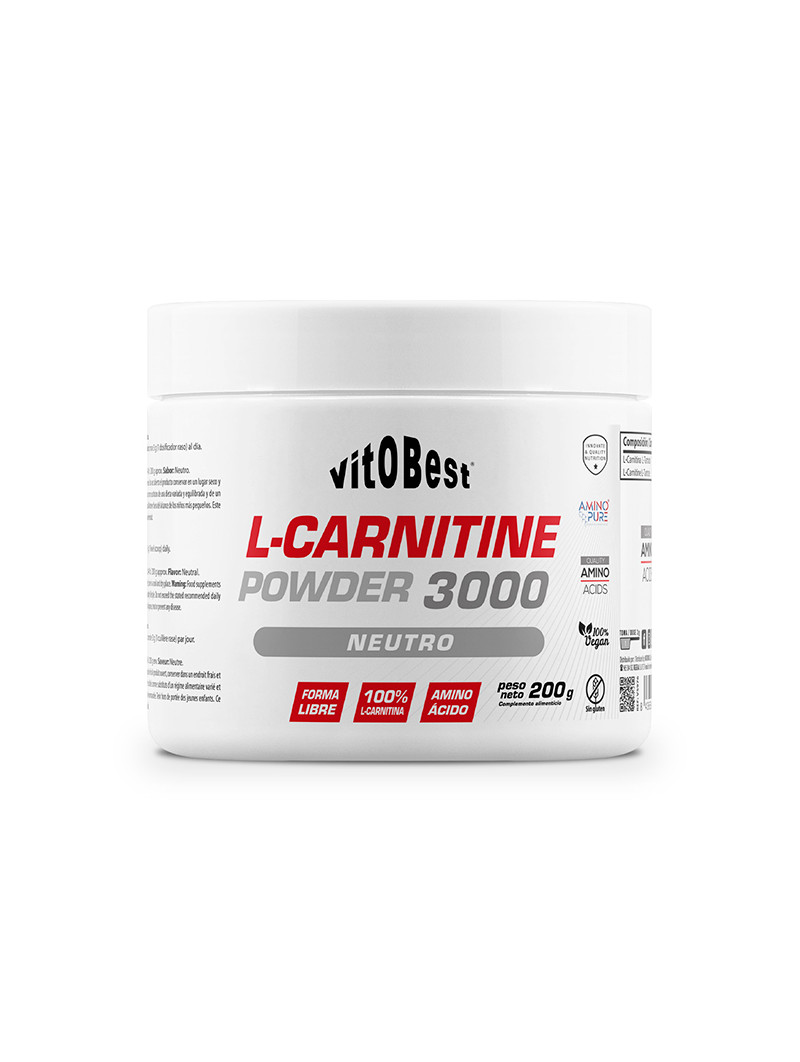
L-Carnitine 3000 Powder from Vitobest® provides L-carnitine L-tartrate Aminopure® in neutral powder, without added colorants or sweeteners. Its manufacturing under strict quality controls guarantees a highly pure L-carnitine with excellent tolerance. Its format allows adjusting the dose with total freedom and mixing it with water, juice or any pre or post workout preparation. Each 3 g serving provides 2.046 mg of pure L-Carnitine.
-(Banner).jpg)
Bibliography:
1Stephens FB, Constantin-Teodosiu D, Greenhaff PL. New insights concerning the role of carnitine in the regulation of fuel metabolism in skeletal muscle. J Physiol. 2007;581(Pt 2):431–444.
2Volek JS, Kraemer WJ, Rubin MR, et al. L-Carnitine L-tartrate supplementation favorably affects markers of recovery from exercise stress. Am J Physiol Endocrinol Metab. 2002;282(2):E474–E482.
3Ho JY, Kraemer WJ, Volek JS, et al. L-carnitine L-tartrate supplementation favorably affects biochemical markers of recovery from physical exertion in middle-aged men and women. Metabolism. 2010;59(8):1190–1199.
4Fielding R, Riede L, Lugo JP, Bellamine A. L-carnitine supplementation in recovery after exercise. Nutrients. 2018;10(3):349.
5Malaguarnera M, Cammalleri L, Gargante MP, et al. L-Carnitine treatment reduces severity of physical and mental fatigue and increases cognitive functions in centenarians: a randomized and controlled clinical trial. Am J Clin Nutr. 2007;86(6):1738–1744.
6Pistone G, Marino AD, Leotta C, et al. Levocarnitine administration in elderly subjects with rapid muscle fatigue. Drugs Aging. 2003;20(10):761–767.

Allergens: none. Gluten-free.
Ingredients: L-Carnitine L-Tartrate.
| Composition | per 3 g | ||
|---|---|---|---|
|
|||
Take 3 g (1 level scoop) per day.